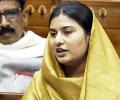
Samajwadi Party leader and Kairana MP Iqra Choudhary has moved the Supreme Court seeking effective implementation of the Places of Worship (Special Provisions) Act, 1991. This move comes amidst several petitions challenging the law's validity, including those filed by the Akhil Bhartiya Sant Samiti and lawyer Ashwini Upadhyay. The Supreme Court, in December 2022, had restrained all courts from examining fresh suits and passing interim orders in pending cases seeking to reclaim religious places. The Act aims to maintain the religious character of places of worship as they existed on August 15, 1947, but the dispute relating to Ram Janmabhoomi-Babri Masjid at Ayodhya was kept out of its purview. The court has listed Choudhary's plea with other pending pleas for February 17.
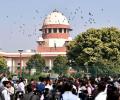
A bench comprising Chief Justice Sanjiv Khanna and Justice Sanjay Kumar also indicated that it may not take up the pending scheduled petitions, heard earlier by a three-judge bench, during the day as it was sitting in a combination of two judges.

Members of Hindu right-wing outfits allegedly created ruckus at a mausoleum in Fatehpur district in Uttar Pradesh, demanding permission to offer prayers and claiming a temple had previously existed at the site. The incident has led to heightened security and political reactions.
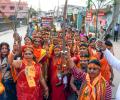
Stones were allegedly pelted during a religious procession in Jharkhand's Hazaribag district, triggering tension in the area. The incident occurred near Jama Masjid Chowk around 11 pm on Tuesday when a Mangla procession was underway as part of the Ram Navami celebration. Police resorted to firing in the air to bring the situation under control. The exact reason for the stone-throwing is yet to be ascertained, but locals say a dispute arose between two groups over the playing of communal songs.
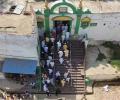
Three men from Delhi were detained in Sambhal, India, for allegedly attempting to perform Hindu rituals, including a havan and puja, at the Shahi Jama Masjid. The incident occurred on Friday, with police citing concerns about public order and potential disruption to communal harmony. The mosque is a site of ongoing religious tensions, with four people having died in violence last year related to a court-ordered survey. The detainees claimed they were attempting to perform rituals at a nearby Vishnu Harihar temple.
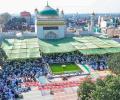
The law prohibits conversion of any place of worship and provides for the maintenance of the religious character of any place of worship as it existed on August 15, 1947.

The Supreme Court of India has extended its stay on a court-monitored survey of the Shahi Idgah Mosque complex in Mathura, which is located adjacent to the Krishna Janmabhoomi temple. The court deferred the hearing on a plea against the survey to April 1, while the interim order staying the survey will continue to operate. The Hindu side claims that the mosque complex holds signs of a temple that once existed at the site, while the Muslim side contends that the lawsuits filed by the Hindu litigants violate the Places of Worship (Special Provisions) Act of 1991.

In a post on X, Modi shared a video montage of the ceremony in which a new idol of the Ram Lalla was consecrated at the Ayodhya temple.
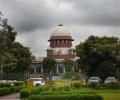
Commencing hearing on pleas challenging the constitutionality of the Places of Worship Act, 1991, the Supreme Court asked the Centre to reply to cross-pleas against or seeking implementation of statute.
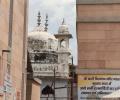
The Supreme Court's 2023 order refusing to stay a scientific survey at the Gyanvapi Mosque complex has sparked claims over several other disputed places of worship across India. This has led to several court cases, including one in Mathura where a survey of the Shahi Idgah Mosque complex was ordered, and another in Ajmer where a claim was made that a Shiva temple existed within the dargah of Sufi saint Moinuddin Chishti. The article also highlights a dispute over the Bhojshala in Madhya Pradesh, which Hindus consider a temple and Muslims consider a mosque. The Supreme Court's order has reignited debates about the Places of Worship (Special Provisions) Act, 1991, which prohibits the change of character of religious places as they existed on August 15, 1947.

Mohan Bhagwat said the temple would be constructed in the same grandeur as it existed before, using the "same stones" under the guidance of those who were the flag-bearers of the Ram Janmabhoomi movement for the last 25 years.
Some of his directives had the Supreme Court judges disclose their assets whereas the row over the discovery of cash from a sitting judge's official residence paved way for inquiry.

The Shia Waqf Board is drafting the terms and conditions of a mutual agreement.

Maharashtra Navnirman Sena chief Raj Thackeray will not participate in the all-party meeting called by the state government to resolve the loudspeaker dispute, MNS leader Sandeep Deshpande said on Monday.
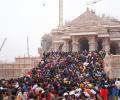
The three-day celebrations began on Saturday with a recital of Yajurveda and Chief Minister Yogi Adityanath performing an 'abhishek' on the Ram Lalla idol.
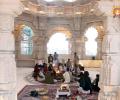
'They are from the north, east, west, south and northeast part of India. They will be the 'mukhya yajmaan' (main hosts)'
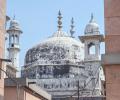
The Places of Worship Act is 'An Act to prohibit conversion of any place of worship and to provide for the maintenance of the religious character of any place of worship as it existed on the 15th day of August 1947, and for matters connected therewith or incidental thereto'.

'The BJP lacks a credible mass leader who matches Mamata Banerjee's popularity.' 'Given the division of votes among Opposition parties, the West Bengal government's dole-giving strategy, and the consolidation of the poor, significant sections of scheduled caste groups and Muslim minorities behind the ruling party, it will be difficult to dislodge the Trinamool from power.'
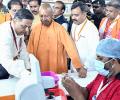
Uttar Pradesh Chief Minister Yogi Adityanath highlighted the successful execution of the Maha Kumbh 2025, emphasizing effective crisis management, economic benefits, and the event's role in national unity and infrastructure development. He cited the swift response to a stampede on January 29 and the extensive preparations that ensured a smooth experience for millions of pilgrims.
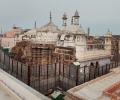
A bench of Justices D Y Chandrachud, Surya Kant, and P S Narasimha made the important observation during an hour-long hearing of the Gyanvapi mosque dispute and said that it has dealt with provisions of the Places of Worship Act in its 2019 Ayodhya verdict and section 3 does not expressly bar ascertaining of the religious character of the place of worship.

The petitions filed by the Anjuman Intezamia Masjid Committee (AIMC) and the Uttar Pradesh Sunni Central Waqf Board had also challenged a Varanasi court order of April 8, 2021 to conduct a comprehensive survey of the Gyanvapi mosque.
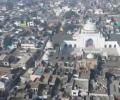
A court in Budaun will decide on December 24 whether to proceed with a hearing in the Jama Masjid Shamsi versus Neelkanth temple case. The dispute arose in 2022 when a Hindu group claimed the temple existed at the mosque site and sought permission to worship. The Supreme Court recently restrained all courts from entertaining and passing any orders on lawsuits seeking surveys of religious places under the Places of Worship (Special Provisions) Act, 1991. The Muslim side argues that the lower court should not proceed with the hearing as it cannot pass any orders, while the Hindu side maintains the Supreme Court order does not stop the hearing. The court will now decide whether to continue the proceedings.

Participating in the eighth edition of Deepotsav in Ayodhya - the first since the consecration of Ram temple on January 22, Adityanath said, "This is a historic first as after 500 years, Lord Ram is now in his abode in Ayodhya for Diwali."
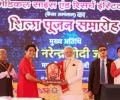
'While suppression of information is acceptable for the government, the Opposition's efforts at pinning the government and its leaders is labeled anti-national,' points out Nilanjan Mukhopadhyay.
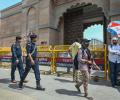
At present the people are allowed to worship once in a year only, he submitted before the court.
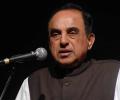
The Supreme Court on Friday allowed Bharatiya Janata Party leader Subramanian Swamy to intervene in the pending matters relating to the Ayodhya title dispute with his plea seeking construction of Ram temple at the site of demolished disputed structure.

A local court in Ajmer has issued notices to the dargah committee, the Ministry of Minority Affairs, and the Archaeological Survey of India on a plea seeking to declare the shrine of Sufi saint Khwaja Moinuddin Chishti a temple. The petition, filed in September, has sparked a heated debate, with politicians and community leaders weighing in on the potentially volatile issue. The dargah committee has declined to comment, but the Anjuman Syed Zadgan, a body representing the caretakers of the dargah, described the petition as a deliberate attempt to fracture society along communal lines. The petition comes just days after four people were killed in Sambhal, Uttar Pradesh, following a local court ordering survey of a Mughal-era shrine. The Places of Worship (Special Provisions) Act, 1991, which fixed August 15, 1947, as the cut-off date for status quo on the character of religious places, is at the centre of much of the debate. Several politicians, including Union minister Giriraj Singh and PDP chief Mehbooba Mufti, have weighed in on the issue. The Communist Party of India (Marxist) has called the civil court's decision to entertain the petition unwarranted and has asked the Supreme Court to immediately intervene.

The Places of Worship (Special Provisions) Act, 1991 provides for maintaining the 'religious character' of holy structures as it existed on August 15, 1947.
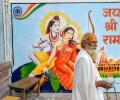
'Chandra Shekhar used to say that some people may oppose such a decision from their mouth, but all will accept it from their heart as the best solution to the dispute.'
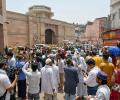
The Supreme Court on Friday agreed to hear an appeal of the Gyanvapi management committee against an Allahabad High Court order which held that lawsuits for "restoration" of a temple where the mosque stands in Varanasi are maintainable.
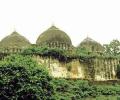
A Hindu body has moved the Supreme Court challenging a provision in the 1991 law that provides for maintaining the "religious character" of holy structures as it existed on August 15, 1947, in a bid to open the litigation route to reclaim disputed religious sites other than the Ram Janambhoomi in Ayodhya. The petition, which has challenged Section 4 of the Places of Worship (Special Provisions) Act, 1991, assumes significance in the case of Kashi and Mathura, where two disputed mosques stand.

Expressing dissatisfaction over the high court's verdict of dividing the 2.77 acre disputed site into three parts among Muslims, Hindus and Nirmohi Akhara, different religious groups have approached the apex court.
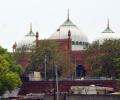
The objections against the suit were raised by the management committee of the mosque and the Uttar Pradesh Sunni Central Waqf Board.
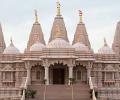
The New York Times said in a report on Wednesday that in the lawsuit filed in New Jersey federal court and amended last month, BAPS has been accused 'of luring labourers from India to work on temples near Atlanta, Chicago, Houston and Los Angeles, as well as in Robbinsville, New Jersey, paying them just $450 a month'.
An Indian-origin couple, Pankaj and Radhika Oswal, building a multi-million dollar mansion in Melbourne, who have run into a dispute with their construction workers over eating ham sandwiches and meat pies during work, are adamant that they do not want their religious sentiments to be hurt.

He could have blazed a trail that few Indian judges had. It was a missed opportunity of a lifetime, notes Ramesh Menon.

The participants lauded the government and the people for ensuring harmony after the apex court verdict on Saturday.
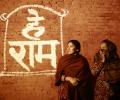
During the hearing, Chief Justice of India JS Khehar also offered to serve as a mediator, if negotiations broke down.

The apex court rejected an appeal challenging a July 10 decision of the Allahabad high court which had also dismissed the plea finding no error or illegality in the order of a Mathura civil judge who had decided to first hear the issue of maintainability of the suit as raised by management committee of the mosque.
The petitioners seeking reconsideration by a larger bench, the observations made by it in a 1994 verdict that a mosque was not integral to Islam.
